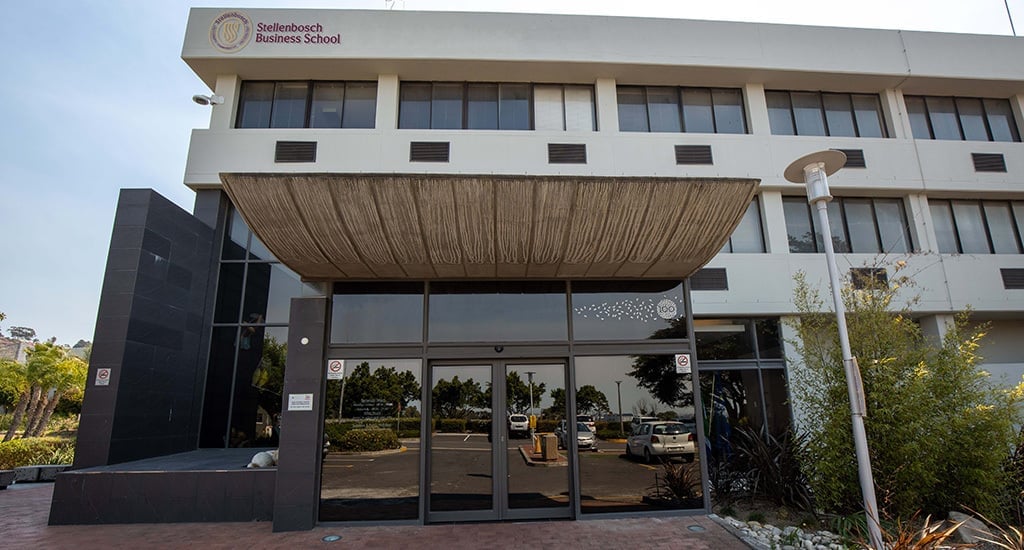
Welcome to Stellenbosch Business School
We are a triple-accredited African business school focused on responsible leadership development. It has been almost 60 years since we opened our doors to 14 MBA students in 1964. Today, we offer world-class programmes to students from around the globe. We are extremely proud of our more than 30 000 alumni, many of them responsible leaders in the boardrooms of major organisations all over the world.
Find out why Stellenbosch Business School is one of the highest ranked business schools in Africa.
Accreditation and Rankings
Memberships
Campus and Facilities
Why study with us?
Study at a school with 3 international accreditations
We were the first school from an African university to receive all three major international accreditations: AACSB, EQUIS and AMBA. This Triple Crown of accreditations is held by an elite group of just over 100 business schools - that is just over 1% of the world’s schools. Studying with us means you will acquire a globally benchmarked business qualification.

Choose a globally acknowledged school

We are well established
We form part of Stellenbosch University, which celebrated its 100-year anniversary in 2018 and is the top-ranked research university in Africa.

We have a global perspective of business knowledge
We have partnerships with schools on all the continents. We undertake joint research, our faculty members serve on international boards, we have memberships of key industry bodies, we host joint conferences, and we arrange exchange opportunities for students and faculty.

We have African expertise
We have become known for our African-focused but globally relevant expertise in areas such as sustainable development, futures research, development finance, ethics and corporate governance, responsible leadership development, management coaching and emerging-country economics. We have the highest average number of research publication citations for core faculty of any business school in South Africa and Africa.

Our students come from a diversity of countries
Students from about 40 different countries enrol for our programmes.
Grow as a responsible leader
Responsible leadership development is a key differentiator of our programmes - particularly our MBA. We also undertake research in this field.

Benefit from our business connections
Exposure to business connections is important for your career. Our close cooperation with industry ensures an academic offering aligned with the needs of the world of work. Collaboration also leads to commissioned research, access to employers’ recruitment platforms, and stronger societal impact through initiatives such as the Small Business Academy, Lion's Den and Consulting Club. We have local and global business leaders on our Advisory Board. Also, upon graduation, you will become part of our alumni network ~ a powerful ecosystem of business connections all over the world.

Remain relevant through the knowledge we share
We create business knowledge through our research, and academic and industry partnerships. We share our research on various platforms - such as our journals, Stellenbosch Management Review, and speaker events, Access to the latest business and leadership knowledge translates into lifelong learning.

Co-create social impact with us
We endorse the importance of responsible business and management education. We also ensure ethics, responsibility and sustainability (ERS) integration in our programmes, institutional practices and stakeholder interactions. As a student with us, you will learn how to involve stakeholders in operationalising social impact, how to lead responsibly, and how to become a steward of society.

We are here to support you
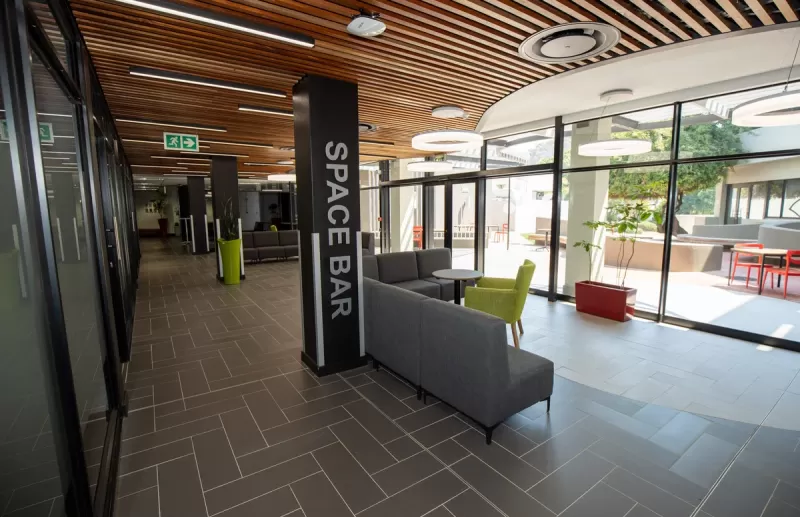
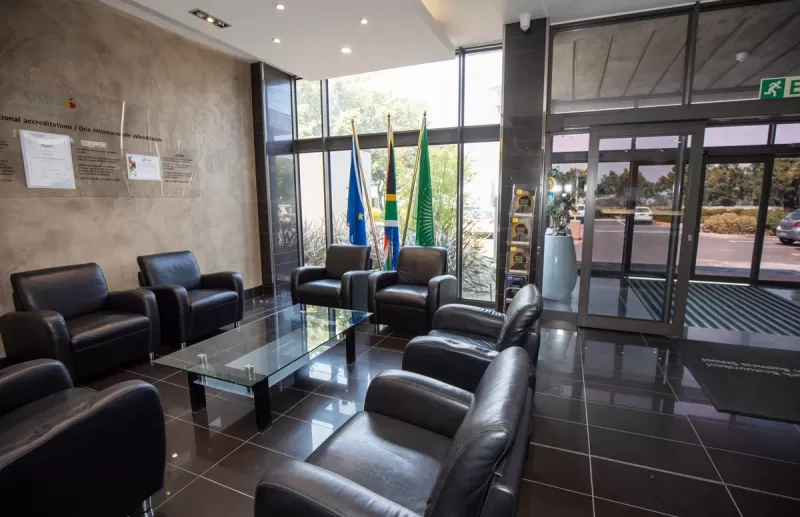
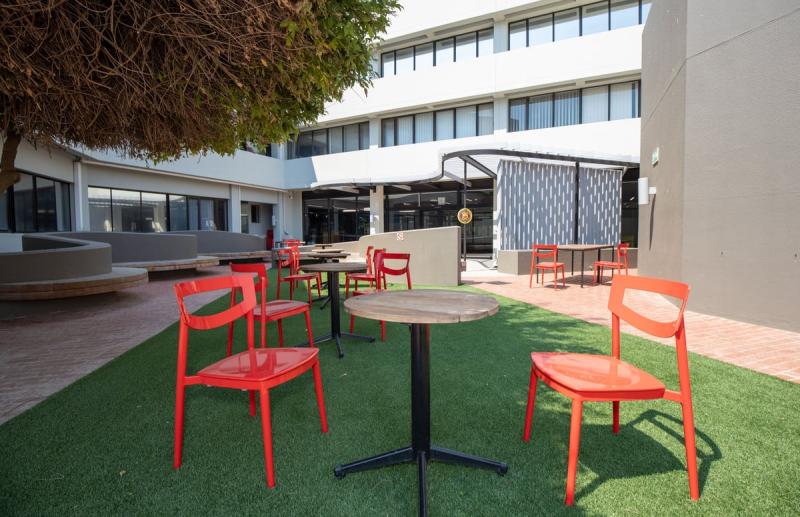
- Excellent infrastructure: Our digital and physical environments are aligned with the standards for world-class business education. Our lecture rooms are equipped with state-of-the-art technology that enables remote students to attend lectures and speaker events from wherever they are in the world. On-campus facilities include break-away rooms, communal spaces, a cafeteria and a coffee shop, a prayer room and a lactation room.
- ICT facilities: These include interactive lecture rooms, free Wi-Fi access to Microsoft 365 and extended support hours.
- A wide range of support services and friendly staff: These services are offered via touch points such as the Career Leadership Office, Library, Admissions Office, Academic Administration and International Affairs.
Our accreditations

Our Vision, Mission and Values
Be a creator of value for a better world
Through knowledge advancement and transformative learning we develop responsible leaders who positively impact society.
- Excellence: We exceed expectations
- Accountability: We are answerable for our actions
- Compassion: We care for the well-being of all our stakeholders
- Equity: We commit to restitution, fairness and inclusivity
- Respect: We embrace the dignity of each person
Want to join Stellenbosch Business School?
Our areas of expertise include business management, development finance, futures studies, management coaching, leadership development, project management and financial planning. All our programmes benefit from these areas of expertise in one way or another.
Try our Programme Finder tool to see the academic programmes suggested for you.